
St. Martin Projected Versus Actual Release
A projected release date is a calculation based on the sentence information, applicable credit rules, and facts then held by the computing agency. It may also be described as possible, scheduled, or estimated. Preserve the source’s exact label. An actual release date records the end of that custodian’s episode after processing has occurred. Even an actual exit can be a transfer to another jail, DPS&C, BOP, or ICE rather than a return to the community.
Pretrial custody is different. A person held at St. Martin Parish Correctional Center before judgment normally has no fixed sentence end. Bond can be set or satisfied, charges can change, a court can issue an order, or another hold can prevent exit. The court record explains the legal event; SMPSO supplies the physical release or transfer time. A sentenced person may receive a computation, but the agency responsible for the sentence must make it.
Find St. Martin Projected Release Dates
Start with the sentence and custodian. The parish jail, Louisiana DPS&C, and a federal facility do not use one shared calculator. A person may also leave the parish roster because state or federal custody began. The St. Martin Parish released-inmate search helps trace that transfer when the current custodian is unclear.
- Determine case stage. Separate pretrial detention from a parish sentence, Louisiana state sentence, or federal sentence.
- Read the court minutes. Confirm offense date, sentence, credit ordered, and whether terms run at the same time or one after another.
- Use the correct agency. Ask SMPSO about a parish sentence, DPS&C about a state sentence, and BOP about a federal sentence.
- Record the exact field. Keep the label, date, location, and time of the lookup. Do not rename “projected” as “actual.”
- Ask about missing inputs. Recently sentenced state records may await official court paperwork before computation is complete.
- Confirm the later event. Recheck custody status and obtain the release, transfer, or discharge entry after the date arrives.
Note: A court’s sentence length alone is not enough to calculate a lawful St. Martin Parish release date.
St. Martin State Release Date Lookup
For a Louisiana state sentence, begin at the DPS&C inmate-information gateway and follow its current locator route. Search by the DPS&C number when known, or use the exact name and date of birth. Compare identifiers before opening a record. Read current location or status separately from any projected date. A transfer from the parish jail into state custody can leave one system stale while the next updates.
DPS&C’s phone locator provides facility information and a “projected release date, if applicable.” Callers need the DPS&C number or the person’s name and date of birth. The locator number is 225-383-4580. If a newly sentenced record has no date, official sentencing paperwork may not yet have reached the computation staff. The time-computation line is 225-342-0799. Those channels concern Louisiana state terms, not ordinary bond release from St. Martin Parish custody.
The DPS&C public-information page explains the state records route and its limits.
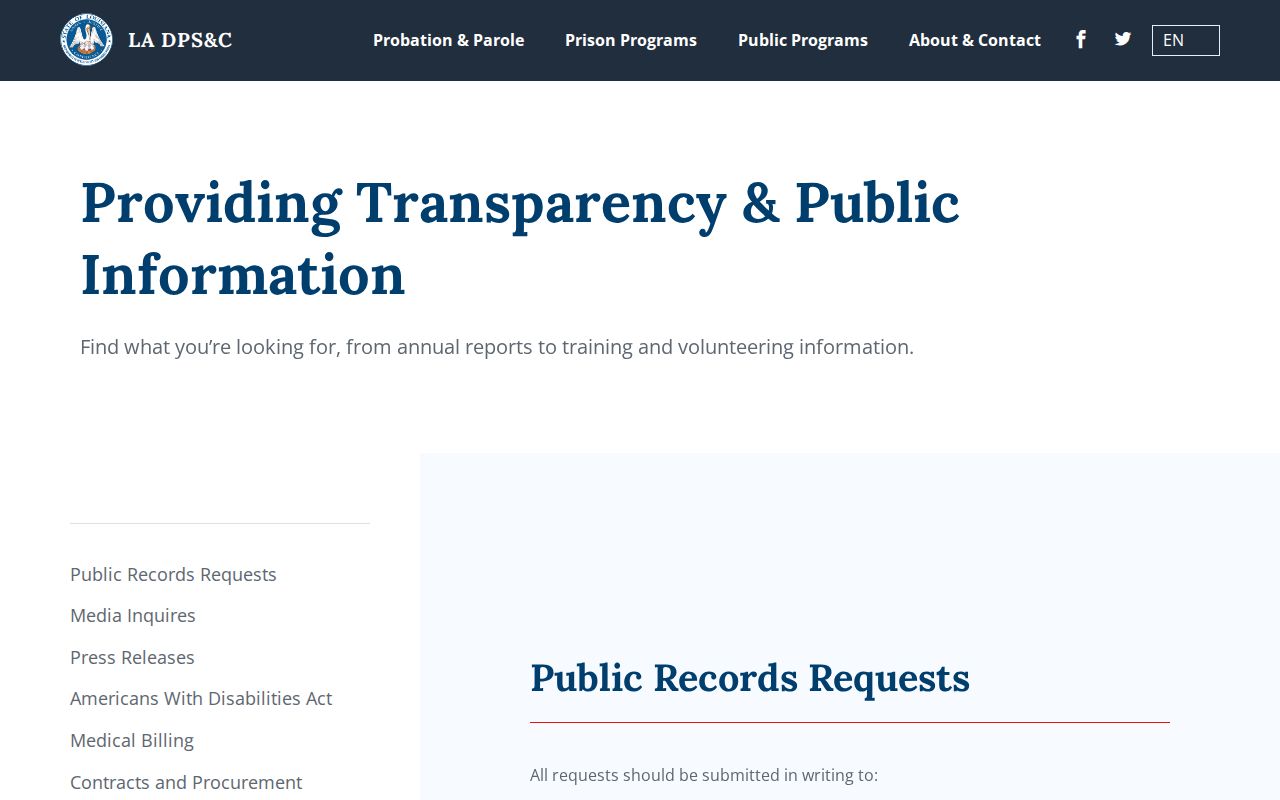
The state page routes formal record requests, while sentence-computation questions belong with the locator and computation contacts named above.
DPS&C states that imprisoned-person master records are confidential except for limited information allowed by R.S. 15:574.12. A broad request may therefore be denied or redacted. Ask narrowly for the maintained projected or discharge date and the releasable status needed to resolve the custody question. Written public-record requests go to the Deputy Secretary’s Office, while a disputed or missing computation belongs with the time-computation channel, not the general records inbox.
St. Martin Parish Sentence Computation
A parish sentence is computed through SMPSO under the law that applies to that person and offense. Ask booking or records to identify the sentence record, credit received, governing eligibility category, and calculated date if one is maintained and releasable. The criminal case minutes remain essential because they show the sentence, credit for time served, and whether multiple terms run concurrently or consecutively. Concurrent terms run at the same time; consecutive terms run one after another.
Do not route a pretrial question into a sentence calculator. For a person awaiting trial, check bond satisfaction, court action, and all holds. If a court ordered release, the order time can differ from the physical exit after booking staff complete processing. If another agency has a detainer, parish custody can end through transfer. The release entry and receiving-agency field provide the needed distinction.
A Letter of Incarceration can verify that a person was held during a requested parish date range, but it should not be called a release certificate unless the returned document states an end date. When exact timing or disposition is needed, request the maintained booking and release entry separately. Ask for the actual exit time, release or transfer code, and receiving agency if kept. Compare those fields with the court minute closest to the claimed event.
- Jail credit
- Time the sentencing authority credits toward the term.
- Concurrent
- Two or more terms ordered to run together.
- Consecutive
- Terms ordered to run one after the other.
- Detainer
- A request or notice tied to another authority that can affect the next custody step.
- Projected date
- The agency’s current estimate, subject to later lawful changes.
Louisiana Good-Time Release Rules
Louisiana’s current good-time framework turns on the offense date and eligibility. For covered felony offenses committed on or after August 1, 2024, Act 7 and R.S. 15:571.3.1 allow a maximum diminution of up to 15% of the sentence for eligible people in parish prison or DPS&C custody. Diminution means a lawful reduction in time served through earned credit. The 15% figure is a ceiling, not a promise that every person will leave after serving exactly 85%.
Exclusions include sex offenses defined by R.S. 15:541 and habitual-offender sentences under R.S. 15:529.1. Credit can also be unavailable, forfeited, or later restored under the governing rules. Earlier offenses follow the preserved R.S. 15:571.3 categories, which include different rates and limits for different groups. That older framework must not be replaced with the newer shorthand.
A sound computation needs the offense date, complete sentence, presentence jail credit, concurrent or consecutive structure, eligibility category, disciplinary credit history, and active holds. The Sheriff or DPS&C applies those facts. Subtracting 15% from the announced sentence does not create an official St. Martin Parish projected release date.
Note: The maximum 15% diminution rule applies only to covered, eligible offenses and is not a universal release-date formula.
Why St. Martin Release Dates Change
A projected date can move in either direction as the agency receives or corrects the inputs. A new field value does not mean the prior one was fabricated. It may reflect a lawful change in computation. Preserve the date on which each lookup was made and ask the computing office which input changed when an explanation is available.
| Factor | Possible effect | Best source |
|---|---|---|
| Sentencing paperwork | Adds or corrects the official term and credit | Sentencing court and computing agency |
| Jail credit | Changes credited time before or during the sentence | Court order and agency computation |
| Concurrent or consecutive terms | Changes how multiple terms combine | Judgment and sentence record |
| Good-time credit | Earned, forfeited, or restored credit changes the estimate | SMPSO or DPS&C |
| New sentence or detainer | Can delay community release or redirect custody | Court and receiving agency |
| Parole action | May add a release path, conditions, delay, or denial | Committee record and DPS&C |
| Appeal or amendment | Can alter the term or legal basis | Court record |
A recent sentence can change more than once while the court and agency reconcile the formal documents. Oral statements in court, a minute entry, and the signed commitment may not reach the calculator at the same time. Ask which document controls the displayed value. If jail credit or the order of multiple terms is disputed, use the court record and the agency’s correction process instead of publishing a private arithmetic estimate.
Note: Save the date of each lookup so a later lawful computation change does not erase the earlier source context.
St. Martin Parole Date Limits
A parole eligibility date or hearing date is not a scheduled release. Eligibility permits consideration when the governing law allows it. The Louisiana Committee on Parole may order or deny parole after a hearing, and later processing can still involve conditions, a detainer, rescission, or another custody. For many DPS&C-committed people whose offenses occurred on or after August 1, 2024, R.S. 15:574.22 removes parole eligibility unless an enumerated category applies.
Older and special cases can fall under R.S. 15:574.4. The correct cohort depends on the offense and sentence, not the lookup date. Even a grant does not prove a person left on hearing day. Check the later DPS&C status and supervising-office assignment, then obtain the actual discharge record when a firm release event must be established.
Confirm St. Martin Actual Release
As the projected date approaches, recheck the responsible system. A St. Martin parish-sentence release should be confirmed through SMPSO. A state discharge should be confirmed through DPS&C status, records, or an authorized notice. Eligible participants can review the DPS&C victim-registration route. A separate St. Martin VINELink check may provide a custody-change alert, but the alert is not a certified release entry.
Federal sentences use BOP rules and its locator, not Louisiana good-time law. ICE or another agency can also receive a person after local or state custody ends. Identify the last custodian, match identity with more than a name, copy the exact status and date label, and ask whether the event was community release or transfer. That final agency check converts an estimate into a verified custody outcome.
A past BOP release date means BOP custody ended under the federal locator’s own explanation, but it does not rule out state, local, immigration, parole, or supervised-release obligations. USMS pretrial detainees may not yet appear as sentenced BOP prisoners. For that path, use the federal docket for authority and the physical jail for departure. These limits are especially relevant in St. Martin because dated official evidence showed that the parish center has housed more than one custody class, even though the historical table is not a current headcount.
If ICE may have received the person, ask the prior custodian for the destination before searching the ICE locator. A local release code can mark the end of parish authority even while immigration custody begins. The projected parish or state date cannot predict when ICE custody will end. Each agency’s date answers only for its own custody episode.